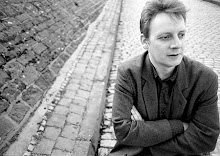
Ameneh Bahrami is an Iranian woman blinded and badly disfigured in an acid attack by a fellow student at Tehran university in October 2004, after she had rejected his romantic advances. In the following trial she informed the court that she desired "to inflict the same life on him that he inflicted on me". In February 2009, the criminal court ordered qisas (retaliation) on her attacker and entitled her to blind him with acid as well. This sentence was reportedly set to be carried out on Saturday the 14th May 2011; it was postponed at the 11th hour on Saturday, the ISNA news agency reported.
Freitag, 13. Mai 2011
Donnerstag, 3. Februar 2011
Growing concerns over rise in killings - UN urges Iran to halt executions
While there seems to be no change in the cases of Sakineh Ashtiani and Habibollah Latifi (who are still supposed remaining on death row), there are now growing concerns not only in Western media over a dramatic rise of executions so far in 2011 in Iranian prisons. Expressing alarm at the increase, United Nations human rights chief Navi Pillay said on Wednesday at least 66 people were executed in January in Iran, while Ms Pillay’s aides said they had recorded about 300 executions for the whole of last year.
Two Iranian opposition leaders, Mir Hossein Mousavi and Mehdi Karroubi, have also condemned the growing number of executions in Iran, while expressing support for the popular movements that are shaking up countries in the Arab world.
On Monday, the U.S. State Department had urged the Iranian government to halt executions after Tehran hanged Zahra Bahrami, a Dutch-Iranian woman, saying she was a drug smuggler. The International Campaign for Human Rights in Iran has said the drug charges were only a pretext to execute Bahrami, and the Netherlands froze all ties with Iran on Sunday, a day after the hanging. According to Reuters news agency her family said the charge was fabricated after she was arrested for participating in anti-government protests in 2009.
According to the United Nations Office for Human Rights (Geneva), there are at least three known cases in which Iranian political activists were executed in January. The three persons, Jafar Kazemi, Mohammad Ali Haj Aqaei and another man whose name was not disclosed, were affiliated with banned political parties. Kazemi and Aqaei were arrested in September 2009 during protests. All three were convicted of mohareb or "enmity against God", and hanged last month.
In the United States there were forty-six executions in 2010 and four executions so far in January 2011 (and more than 3.000 prisoners are actually waiting on death row).
At least 66 executions in Iran's death penalty in January - UN says (BNO News, Netherlands, via New Kerala, India)
Iran: UN Human Rights chief concerned about recent spate of executions (United Nations Office of the Commissioner for Human Rights, Geneva)
UN experts call for a moratorium on death penalty in the Islamic Republic of Iran (United Nations Office of the Commissioner for Human Rights)
Concerns grow over fate of Political prisoner in Iran after disappearance (National Council of Resistance in Iran, an organisation linked to the People's Mujahedin of Iran)
Iranian opposition leaders speak out against surge in executions (Payvand, San Francisco)
Message of Zahra Bahrami's execution to the world (Radio Zamaneh, Netherlands, via Payvand, San Francisco)
Zahra Bahrami Executed in Iran (Rohama.org, Union of Islamic World Students, Tehran)
2 Terrorists Jafar Kazemi and Mohammad Ali Haj Aqaei Executed in Iran (Rohama.org)
Death Row Prisoner's Father: Confessions After 17 Months of torture (International Campaign for Human Rights in Iran, Netherlands, via Payvand, San Francisco)
Dutch gov't seeks return of hanged woman’s body (Reuters via cnews, Canada)
No change in Ashtiani case, says Iranian judiciary (Roundup) (DPA, Germany, via Monsters & Critics, UK & USA)
Judiciary still examining Sakineh Ashtiani case (Tehran Times, Iran)
Iran: 103 Hinrichtungen seit Beginn des Jahres 2011 (Weblog von Ali Schirasi, Germany)
Alle 8 Stunden wird im Iran ein Mensch hingerichtet (Weblog von Ali Schirasi)
Iran: Elf Jahre Gefängnis für Nasrin Sotoudeh (Weblog von Ali Schirasi)
Feuer unter der Asche - Wo ist die iranische Frauenbewegung? Man hört nichts mehr und sieht nichts mehr (Frankfurter Rundschau, Germany)
Women, Islam, Egypt and Iran (The Huffington Post, USA)
Iran urged to drop prison sentences against human rights activists (Amnesty International)
Die Menschenrechte im Iran als Herausforderung für die Weltgemeinschaft (IranAnders.de, Germany)
USA Executions 2011 (as of 01/25/11) (Website of Rick Halperin, Southern Methodist University, Dallas, USA)
Iranian Lawyer Nasrin Sotoudeh was arrested in September 2010 on charges of spreading propaganda and conspiring to harm state security. In January 2011, she has been sentenced to 11 years in prison in addition to barring her from practicing law and from leaving the country for 20 years.
To help Ms Sotoudeh, write letters to the Iranian authorities. More information is here (in German, with English summary).
Sonntag, 26. Dezember 2010
Lawyer: Iran halts execution of Kurdish student
"Iran halts execution of Kurdish student: lawyer
By Hiedeh Farmani (AFP)
TEHRAN — Iran has halted the execution of Kurdish student Habibolah Latifi, who was due to be hanged on Sunday for backing a separatist rebel group, his lawyer told the ISNA news agency.
"The verdict has been halted for the moment," lawyer Nemat Ahmadi told the agency. "The sentence has not been carried out and he has met with his family this morning."
A court in the western city of Sanandaj, Kordestan province, had notified Latifi's other lawyer that he would be hanged Sunday morning, Ahmadi said.
Latifi, a law student, has been convicted of waging war against God (moharebeh) for supporting PJAK, the Party of Free Life of Kurdistan, a banned Iranian-Kurdish rebel group.
In a letter to the judiciary chief Ayatollah Sadeq Larijani on Saturday, Ahmadi said he had requested "a delay in carrying out the verdict, a fair and lawful investigation and commuting of the sentence."
The announcement came as rights groups Amnesty International and Human Rights Watch called on Iranian authorities not to go ahead with Latifi's execution.
Latifi was originally sentenced to death in 2008 for taking part in armed acts in the western province of Kordestan, according to his other lawyer Saleh Nikbakht -- a ruling upheld on appeal in February 2009.
He was detained in November 2007 and charged with taking part in an assault on the car of the prosecutor in Sanandaj, the capital of Kordestan, and attacking a police station the same year.
According to Nikbakht, Latifi had admitted being a PJAK supporter but denied committing acts of violence. The student told the court he was not in Sanandaj when the attacks took place.
London-based Amnesty on Saturday urged Iran to commute the sentence, after hearing from his lawyer that he was to be executed Sunday at Sanandaj prison in Kordestan.
"While we recognise that governments have a responsibility to bring to justice those who commit crimes, this must be done according to international standards for fair trial," said Amnesty's Malcolm Smart.
"It is clear that Habibolah Latifi did not receive a fair trial by international standards, which makes the news of his impending execution all the more abhorrent," said Smart, Amnesty's Middle East and North Africa director.
The New York-based Human Rights Watch issued a similar statement on Friday, calling on Iran's judges to rescind the execution order and suggesting that Latifi had not had a fair trial.
"The circumstances surrounding Latifi's arrest, detention, and conviction strongly suggest that the Iranian authorities have violated his fundamental rights," said Joe Stork, deputy Middle East director at Human Rights Watch.
"As in numerous previous security cases, intelligence agents appear to have subjected Latifi to torture and a court sentenced him to death without any convincing evidence against him."
In Paris, a group of between 20 and 30 demonstrators picketed the Iranian embassy in the early hours of Sunday, with some protesters chaining themselves to the railings outside, organisers and police said.
Officers eventually moved in to cut the chains of the protesters and break up what they said was an unauthorised demonstration, said a police spokesman.
Hundreds of militants from the separatist Kurdistan Workers' Party (PKK), which has waged a bloody campaign for self-rule in southeast Turkey, and its sister group in Iran, PJAK, are based in the mountains of northern Iraq."
Samstag, 25. Dezember 2010
Save the life of Habibollah Latifi
Habibollah Latifi, a Kurdish student and political activist, currently imprisoned at the Sanandaj Prison in south-western Iran, is according to his lawyer under the immediate threat of execution. His niece says Habib has been accused of moharebeh, enmity with God, through a fabricated case of the Sanandaj Intelligence Office. Habib himself said in court that they have extracted confessions from him under special circumstances and under torture. Nemat Ahmadi, the other lawyer of Latifi, said on Saturday that he is presently at the Head of the Judiciary’s office to deliver a letter addressed to Ayatollah Sadegh Larijani, the Head of the Judiciary System of Iran, requesting clemency for his client, as well as objecting to the way this case has been reviewed. Ahmadi said he is hoping to receive a reply by 5:00 p.m. today.
I beg and pray to God, the All Gracious, the All Merciful - Save the life of Habibollah Latifi
From the Guardian:
""Iran poised to execute student accused of being Kurd terrorist
Habibollah Latifi's family say he is not member of separatist group but is being punished for his political activism
A 29-year-old Iranian student activist is facing execution tomorrow unless an international campaign launched by human rights groups can persuade authorities to quash his conviction.
Habibollah Latifi, a politically active student of civil engineering at Azad University, in the south-western province of Ilam , is scheduled to be executed in Sanandaj prison tomorrow, following what his lawyer has described as an unfair trial.
His family is pleading with the international community to urge Iran to stop his execution.
"We do not have any other hope than reaching out to the international community," Latifi's sister Elahe told the Guardian. "Please help my innocent brother not to be executed while people of the world are celebrating Christmas."
Latifi, a member of the Kurd minority in Iran, was arrested on 23 October 2007 in Sanandaj, the capital of Kurdistan province, and was taken to prison where he has been kept for the past three years and two months.
Iran says he was a member of Kurdish Independent Life party (PJAK), an armed opposition group and has convicted him of Muharebeh (enmity against God) but his family denies his connection with PJAK and claims the charges were fabricated .
"This is nonsense, they're just angry with his political activities as a student and have charged him with the false claim that he was a member of PJAK, that's absolutely a lie, it's just an excuse for them to execute him," his sister said.
According to Amnsty International, his trial was held behind closed doors and his lawyer was not allowed to be present to defend him. His death sentence was upheld by the appeal court in Sanandaj on 18 February 2009.
Human rights advocate Peter Tatchell, who has campaigned in defence of Iran's ethnic minorities, said: "Iran has a long history of persecuting its Kurdish ethnic minority population, including framing peaceful, lawful Kurdish rights activists on false charges.
He added: "Habibollah Latifi was sentenced to death after an unfair trial in a closed court, where he had no legal representation – clearly in violation of articles 10 and 11 of the Universal Declaration of Human Rights.
"The Iranian authorities should, at the very least, revoke the execution order and schedule a new trial where Latifi can have legal representation, call witnesses and submit forensic evidence in his defence."
Amnesty's Middle East and north Africa director, Malcolm Smart, said: "We are urgently appealing to the Iranian authorities to show clemency, halt the imminent execution of Habibollah Latifi, and commute his death sentence. "
He added: "It is clear that Habibollah Latifi did not receive a fair trial by international standards, which makes the news of his impending execution all the more abhorrent." "
Montag, 22. November 2010
Iran official says Sakineh's life could be saved
In this CNN talk with Fareed Zakaria which was broadcasted on Sunday, Mohammad Javad Larijani, the Secretary General of Iran's High Human Rights Council, said there is a chance that the punishment of Sakineh Mohammadi-Ashtiani "should be lessened" (see also the second part on the question of nuclear weapons).
Today Larijani told Iran's English-language Press TV that "Iran's Council of Human Rights has helped a lot to reduce her sentence and we think there is a good chance that her life could be saved".
'Ashtiani's life could be spared' (Press TV, Iran, Monday, Nov 22, 2010)
'US should accept influential Iran' (Press TV, Iran, Wednesday Nov 17, 2010)
See also AFP via Asharq Al-Awsat, Reuters USA , AFP France, La règle du jeu, Der Standard Austria
Case of detained Germans going through judicial process (Tehran Times Political Desk)
Americans Reassess Iran (Middle East Online)